


Tile Adhesive vs Cement: Which Is Better for Tiling?
When installing tiles, one of the most common questions contractors and homeowners ask is whether to use traditional cement and sand or modern tile adhesive. While cement and sand were widely used in the past, modern construction practices now recommend tile adhesives because of their superior performance and durability.
Understanding the difference between these two methods can help ensure a long-lasting and professional tile installation.
What Is Tile Adhesive?
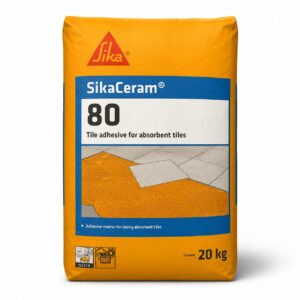
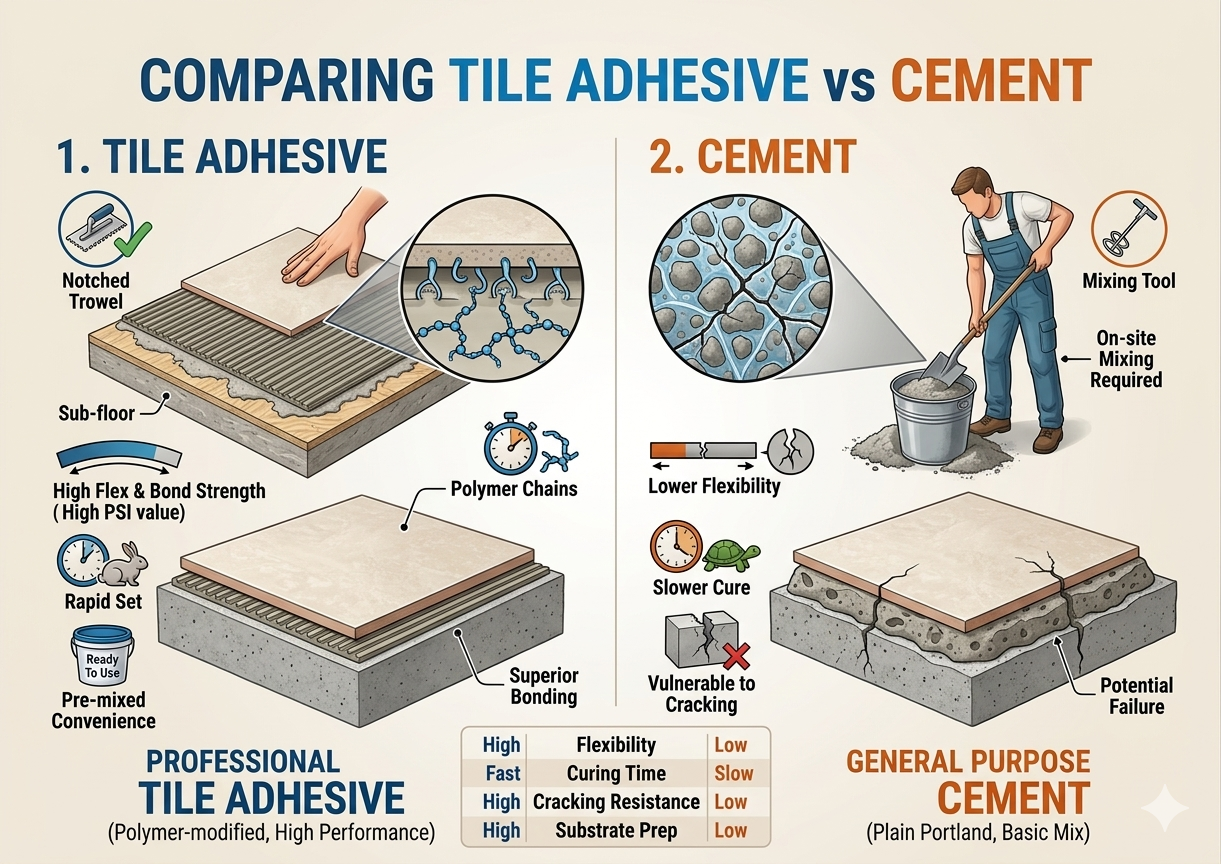
Tile adhesive is a specially formulated bonding material designed to fix tiles securely to surfaces such as concrete, plaster, and screed. It is manufactured using cement, polymers, and additives that improve bonding strength, flexibility, and durability.
Tile adhesive is typically applied using a notched trowel to create even ridges that allow proper tile bonding.
What Is Cement and Sand Installation?
Traditional tile installation uses a mixture of cement and sand as the bonding material. This method has been used for many years in construction.
While it can still be used in some cases, it has several limitations that affect tile performance and durability.
Key Differences Between Tile Adhesive and Cement
Bond Strength
Tile adhesives provide significantly stronger bonding compared to cement and sand mixtures. This helps prevent tiles from loosening or popping over time.
Flexibility
Tile adhesives contain polymers that allow slight movement between tiles and the substrate. This flexibility helps prevent cracks and tile detachment caused by building movement or temperature changes.
Installation Thickness
Tile adhesive can be applied in thinner layers compared to cement mortar, making installation easier and more precise.
Reduced Tile Popping
Because of its superior bonding and flexibility, tile adhesive greatly reduces the risk of tile popping or hollow spots beneath tiles.
When Should Tile Adhesive Be Used?
Tile adhesive is highly recommended for:
- Porcelain tiles
- Large format tiles
- Wall tiling
- Floor tiling
- Areas exposed to moisture such as bathrooms and kitchens
Using tile adhesive ensures a stronger and more durable tile installation.
Professional Tiling Systems
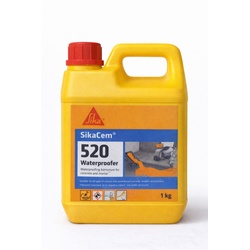
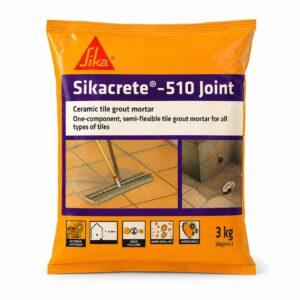
Modern tiling systems combine tile adhesives, tile grouts, and waterproofing products to provide a complete installation solution.
High-quality products from trusted brands such as Sika, Weber, and MC-Bauchemie offer reliable performance for professional construction projects.
Conclusion
While traditional cement and sand methods have been used for years, tile adhesives provide superior bonding, flexibility, and durability. For modern construction projects, tile adhesives are the preferred choice for achieving professional and long-lasting tile installations.
Choosing the right materials and proper installation techniques ensures better performance and reduces costly repairs in the future.

